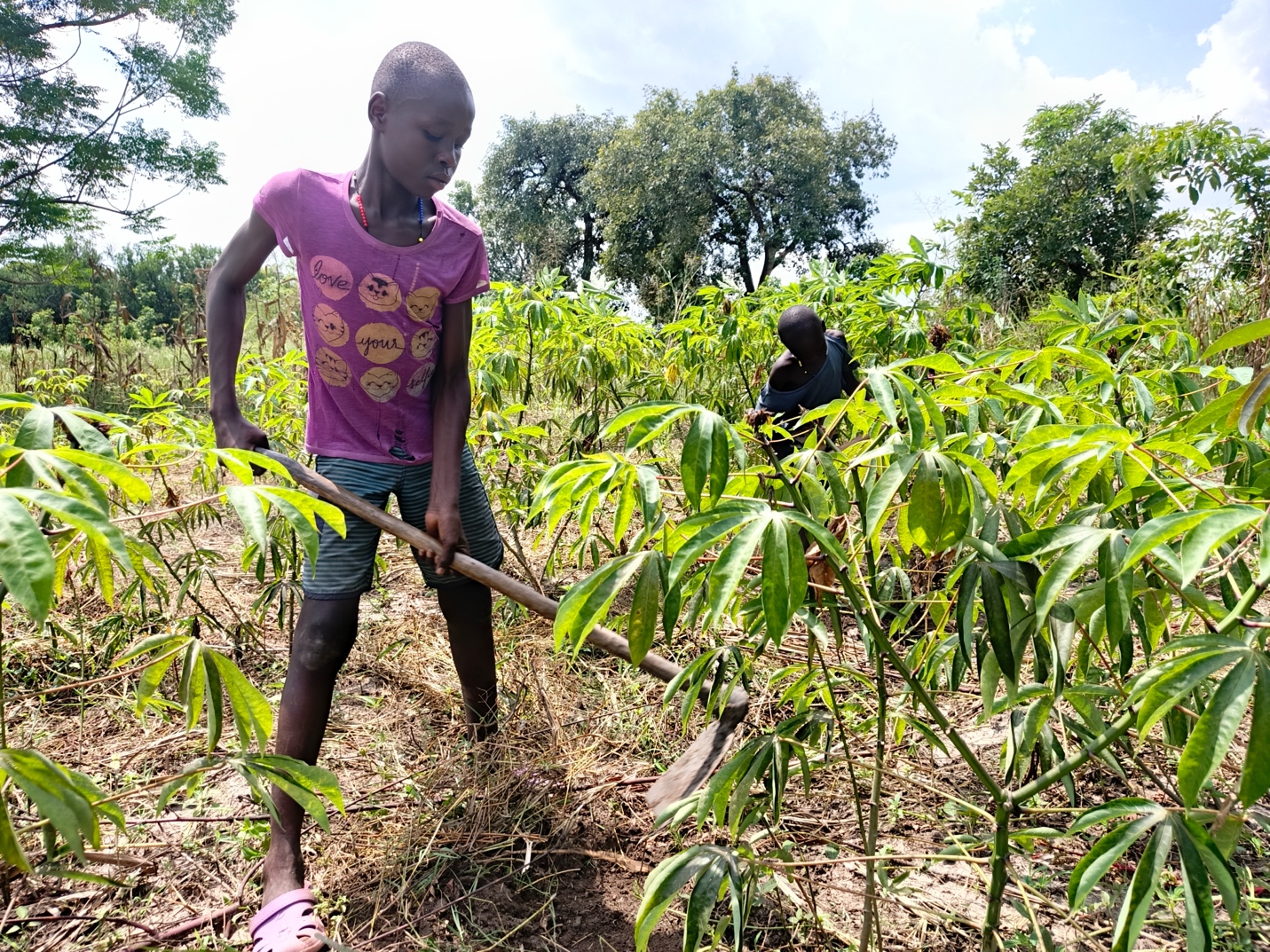
Picture 1 Emmanuel Edwoku supporting with garden work
In many rural communities in Kaberamaido District, families work hard every day to provide food, pay school fees and give their children a better future. But for many years, poverty, low incomes, school dropout, child abuse and limited opportunities made life difficult for many children and their families.
Today, however, change is happening.
Through Share An Opportunity Uganda's Children, Youth and Communities for Change (CYCC) Project, children, parents and community members are gaining new knowledge, skills and confidence to improve their own lives. Families are learning how to save and grow their incomes, parents are becoming more involved in their children's lives, and children are learning that their voices matter.
The stories of Emmanuel Edwoku, known as Emma, and 15-year-old Stephen show what this change looks like in real life.
A father learns new ways to support his family
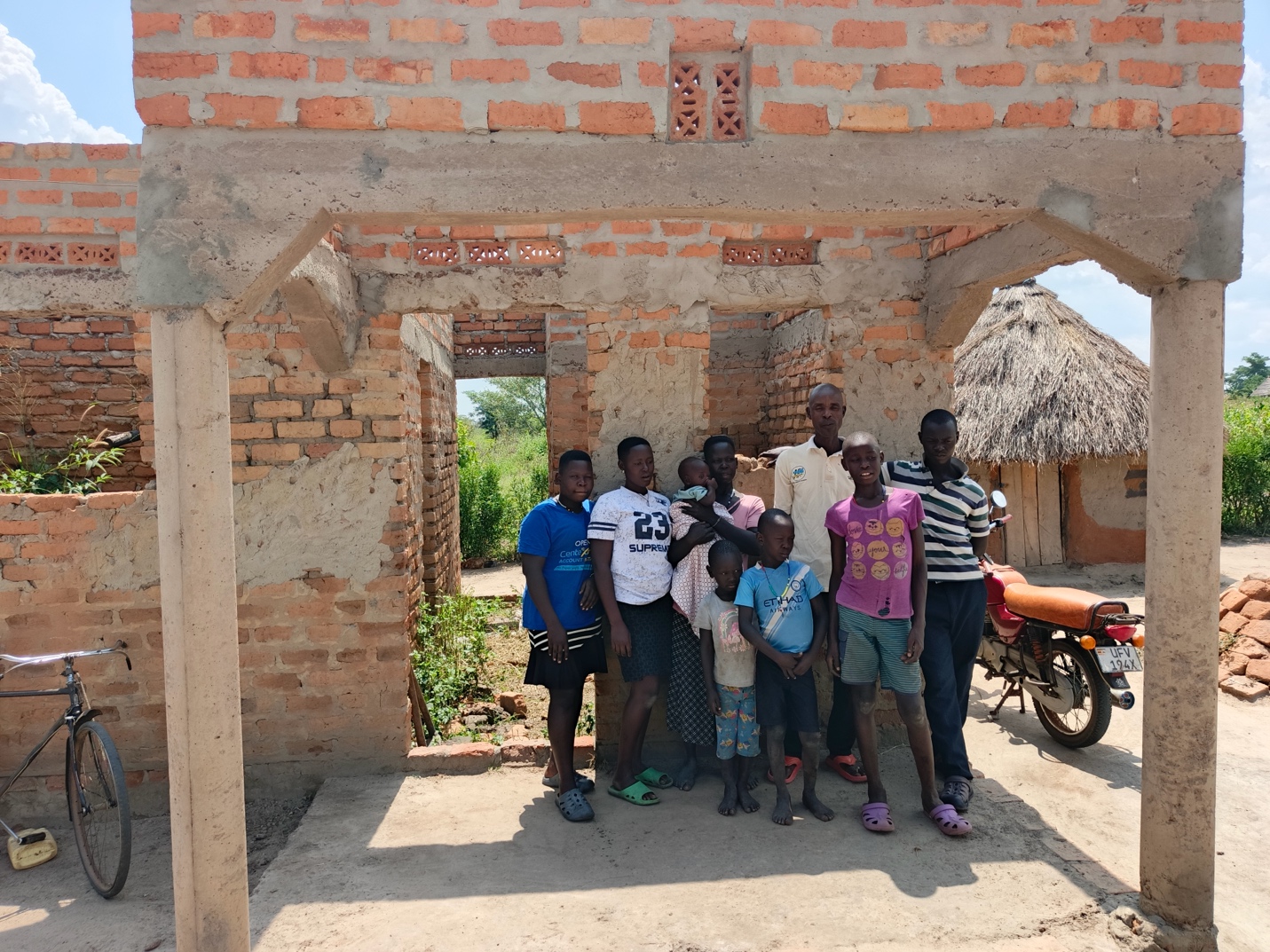
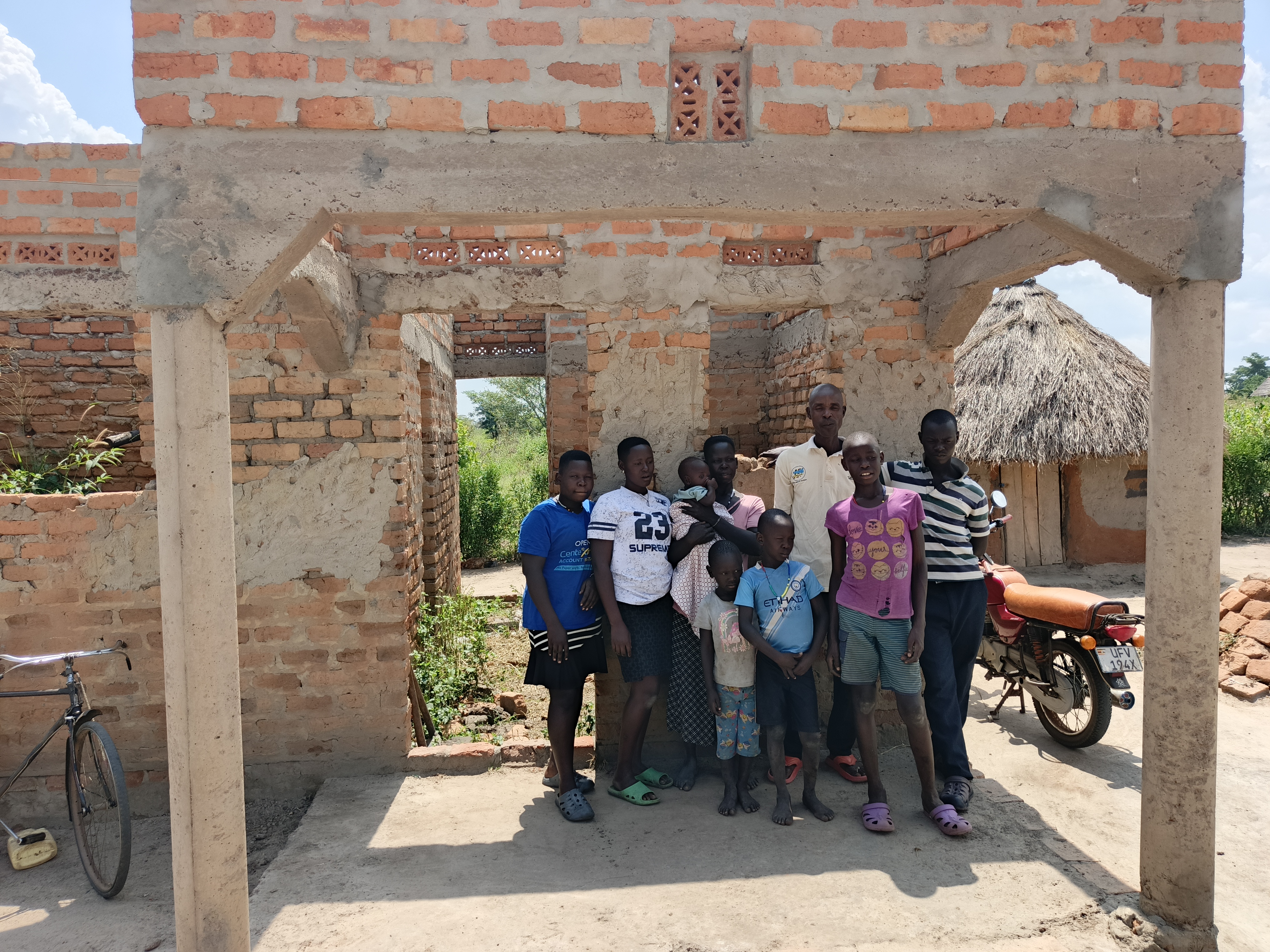
Picture 2 Emmanuel and his family standing in front of their house that is still under construction.
Emma is a 42-year-old farmer and father of seven children. He lives with his wife, Lydia, and together they work hard to support their family.
Their main source of income is farming. They grow cassava, simsim, sorghum, sweet potatoes, beans and green gram. Emma also runs a small retail shop, while his wife earns additional income through tailoring. But life was not always easy.
Before joining the CYCC Project, Emma and his family depended on old farming methods. Their harvests were low, and the money they earned was not enough to meet all the family's needs. They had no strong culture of saving, which made it difficult to pay school fees, buy household items or deal with emergencies. Emma also admits that, like many fathers in the community, he was not as involved as he should have been in supporting his children's education.
Things began to change when he joined the Omarowa Men's Group. Through the group, Emma received training in improved cassava and simsim farming, savings and lending, and positive parenting. His wife also joined a Self-Help Group, where she learned about saving, poultry keeping and business.
The new knowledge started making a difference in their lives. Emma began using improved cassava farming methods, and his harvest increased. He says his cassava production grew from about 11 bags per year to 27 bags per season. After keeping enough food for his family, he is now able to sell part of the harvest and earn more income.
The changes in his farming have also encouraged other farmers. Through the group's cassava demonstration garden, more than 70 farmers in his village have learned about improved cassava farming practices and started applying them in their own gardens.
Saving has also changed the way Emma manages money. He now saves regularly and can access loans to invest in farming and meet his family's needs. His household income has increased from about UGX 120,000 to UGX 310,000 per month.
For Emma, this means more than having money. It means being able to pay school fees on time. It means buying food and other household needs without having to sell family property when an emergency comes. But one of the biggest changes has been in the way he sees his role as a father.
Through the Male Champions and positive parenting sessions, Emma began to understand the importance of being more involved in his children's lives. He now attends school meetings, follows up on his children's attendance and encourages them to stay in school.
Today, all seven of his school-going children are attending school regularly. He also says his relationship with his wife has improved. They now work together more closely and make decisions as a family. His wife's involvement in the Self-Help Group has also brought positive changes. She has increased the number of local chickens she keeps from seven to 15, providing both food and extra income for the family.
For Emma, the biggest lesson has been that change can begin with the knowledge and resources people already have. He now hopes to expand his cassava production, grow his business and invest more in poultry so that he can continue supporting his children's education and future.
Finding the confidence to speak up
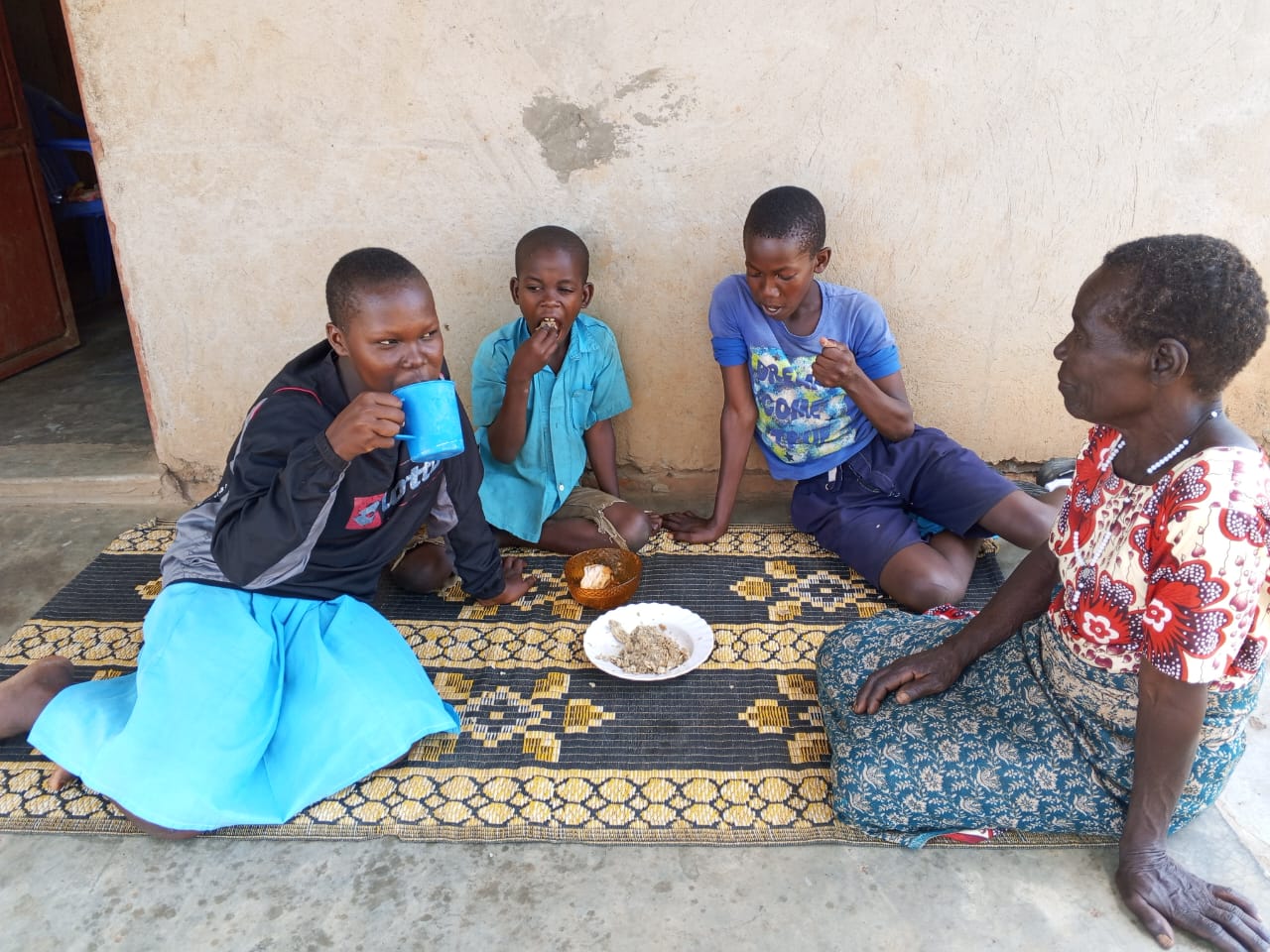
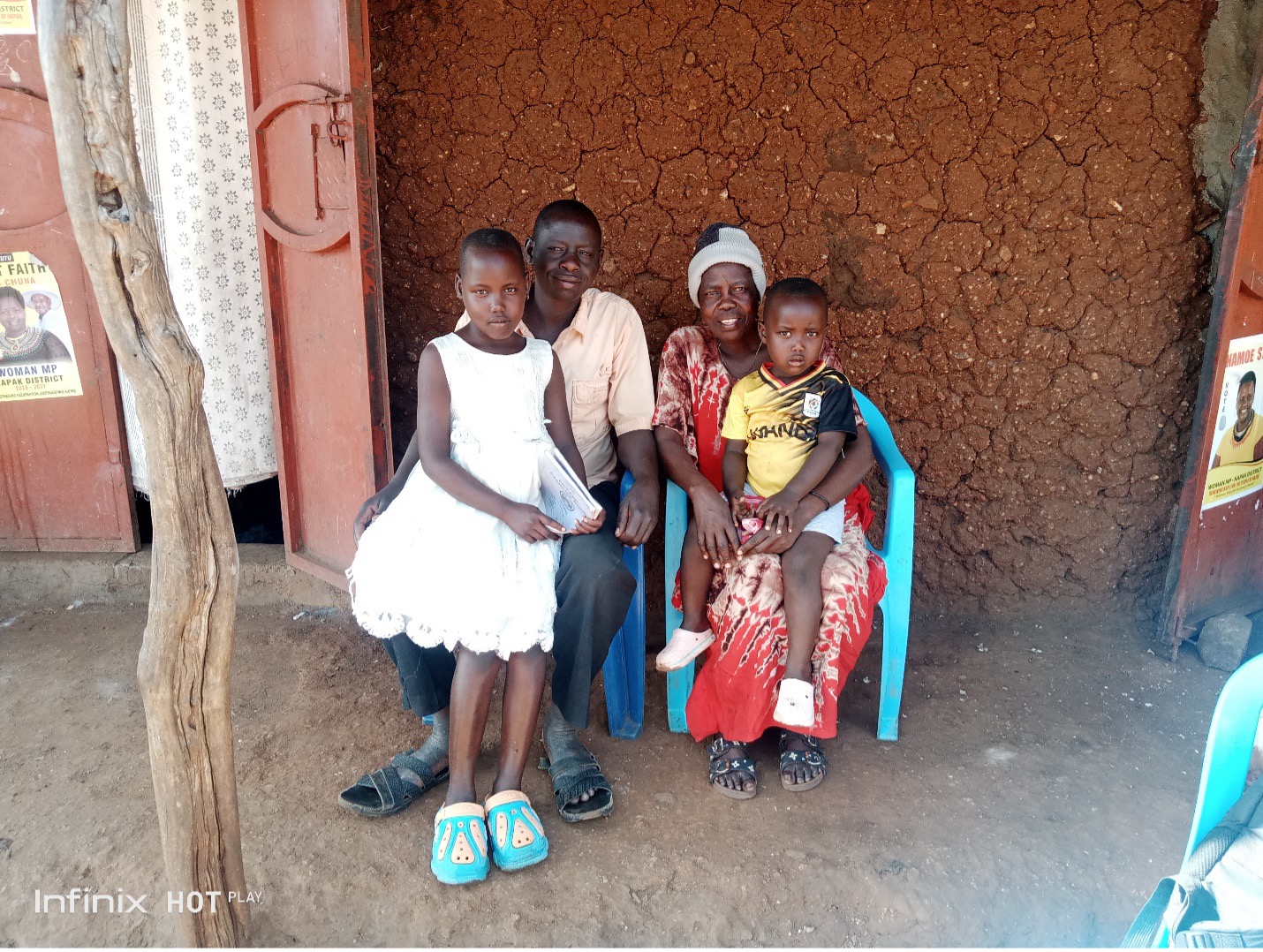
Picture 3 Family having meal
A few kilometres away, another story of change is unfolding through the life of 15-year-old Stephen. He is in Primary Five and lives with his grandmother and cousins. His grandmother is a widow and a peasant farmer. She grows maize, beans, sweet potatoes, cassava and vegetables. The family also keeps poultry, goats and sheep.
Stephen remembers a time when life at home was much more difficult. After the death of his grandfather, the family struggled. They worked hard in their gardens, but the harvests were small. Sometimes they could not afford enough food or meet all their basic needs.
The challenges were not only in Stephen's home. Many children in the community were not attending school because their families could not provide school requirements. Some children dropped out of school, while others faced problems such as child marriage, domestic violence and abuse. Children were often too shy or afraid to speak in front of adults because they were rarely given the opportunity to share their views.
Today, Stephen is one of the children helping to bring change. He is a member of the Bright Kids Children's Club and serves as a mobilizer and timekeeper. He also belongs to the Child Rights Club at school and represents other children on the children's council.
Through these groups, Stephen has learned about children's rights, responsibilities, leadership and communication. More importantly, he has learned to speak up. When Stephen and other children noticed that their school buildings were old and in poor condition, they raised the issue with school leaders. They asked for improvements to the classrooms, windows, doors and roof.
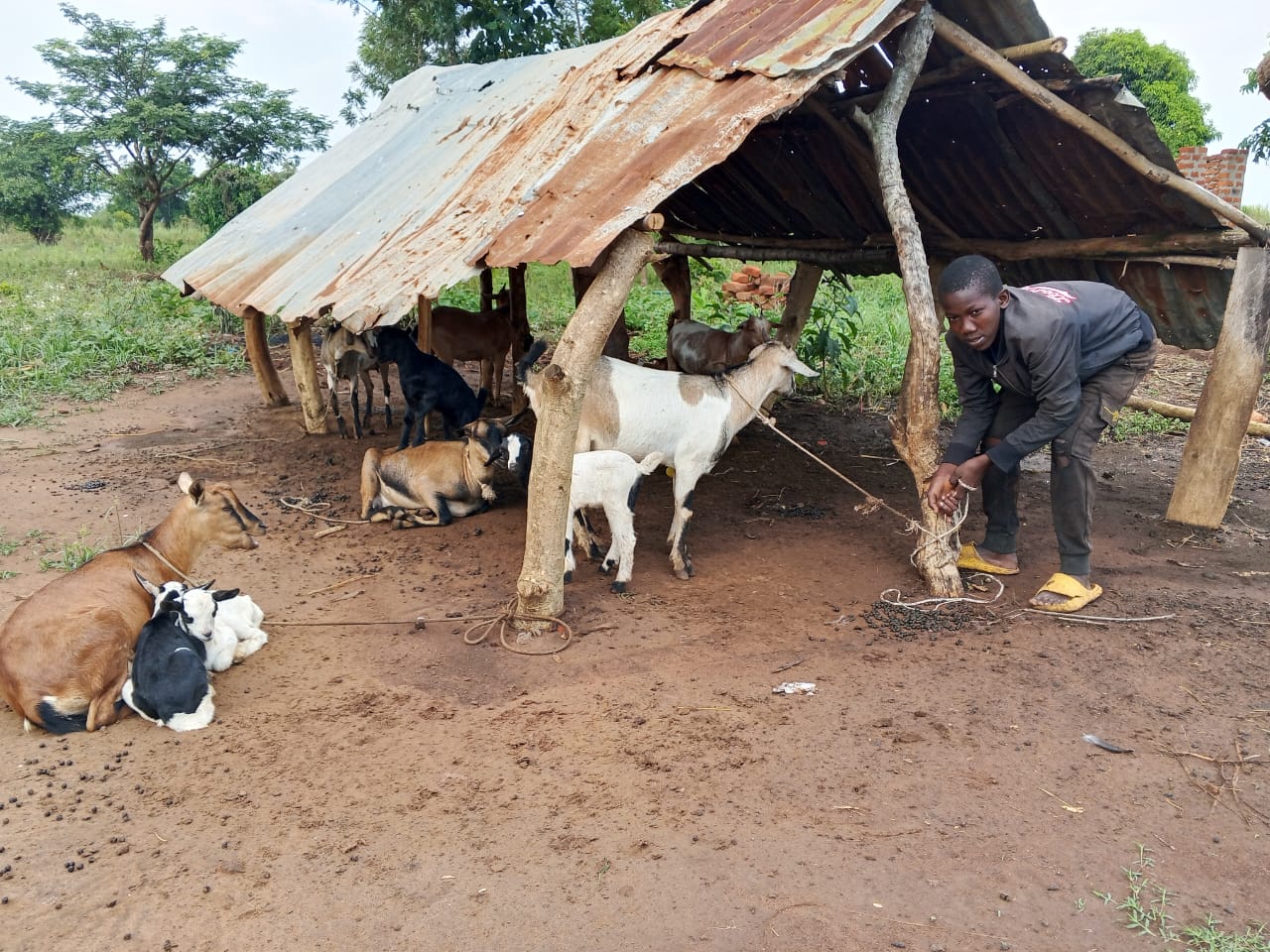
Picture 4 Stephen at the animal shade preparing to graze
Their voices were heard. The school later received support for the rehabilitation of six classrooms and the construction of a five-stance VIP pit latrine for boys.
For Stephen, this was an important moment. It showed him that children can raise issues and that adults can listen and take action.
“I am more confident than before and able to speak for other children in our school,” Stephen shared.
He now encourages other children to attend school and speak about the problems they face. He also wants other children to understand that they have a role to play in making their schools and communities safer. Stephen's confidence is also helping him think seriously about his future. He enjoys science and loves playing football. His dream is to complete his education and become a professional footballer.
But the changes are not only happening at school. Stephen's grandmother is also building a better life for the family.
Through her Self-Help Group, she learned about saving and borrowing. She has used the knowledge and income from her farming and livestock activities to support the family and improve their home.
She was able to sell some livestock and use the money to build a permanent house for the family.
Stephen says the family is now living in a better home and his grandmother is more able to provide for their school needs. She also listens more to the children's views and involves them in family discussions.
Change that reaches beyond one family
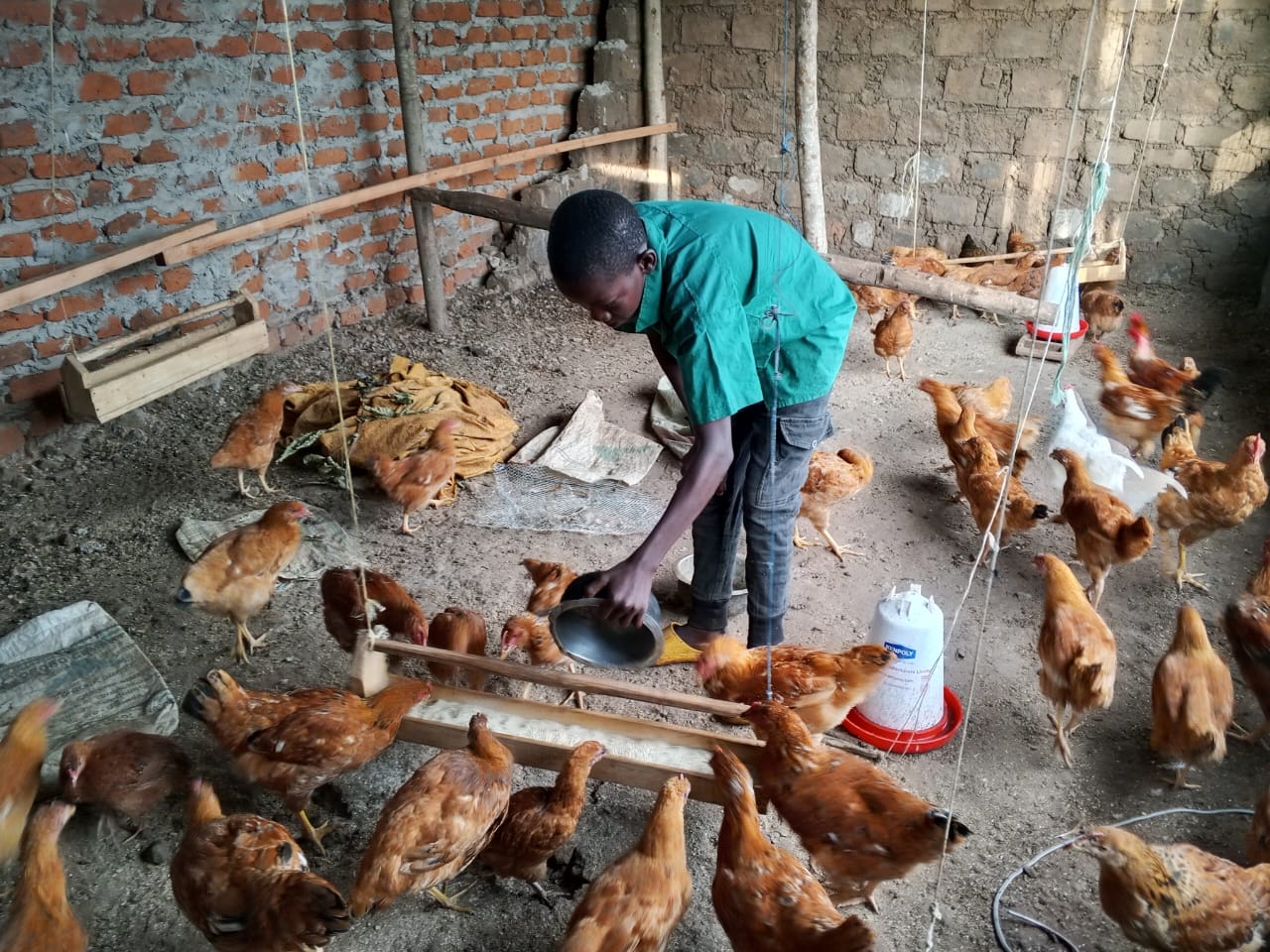
Picture 5 Stephen feeding the hens
The stories of Emma and Stephen may be different, but they tell one bigger story.
The CYCC Project is working with children, parents, caregivers and community groups because the wellbeing of a child is closely connected to the wellbeing of their family and community.
When a parent has a better income, they are more able to provide food and school requirements. When fathers take an active role in parenting, children receive more support. When caregivers learn to save and invest, families become stronger. And when children are given the confidence to speak, they can help identify problems and become part of finding solutions.
Across the community, more parents and caregivers are joining Self-Help Groups. Families are saving, borrowing and starting or improving small businesses. More parents are becoming involved in their children's education.
Children are also becoming more confident about reporting problems and sharing issues that affect them at home, at school and in the community. Community groups, including Children's Groups, Men's Groups, Self-Help Groups, youth groups and Child Protection Committees, are increasingly working together to support children and families.
For Stephen, one of the most important things he has learned is that his future matters. He now understands that education can help him build the life he dreams of. For Emma, the change has helped him become a better farmer, a better provider and a more involved father.
Their stories show that real change does not always start with something big. Sometimes it begins when a farmer learns a new way of growing a crop. Sometimes it begins when a grandmother starts saving a small amount of money every week. Sometimes it begins when a father decides to attend his child's school meeting. And sometimes, it begins when a child finds the courage to raise their hand and speak.
Through the CYCC Project, these small changes are coming together to create something bigger. Families are becoming more self-reliant. Parents are taking greater responsibility for their children. Children are becoming more confident and active in their communities.
For Emma and Stephen, the future is still ahead of them. There are still challenges to overcome and dreams to achieve. But today, there is something that was not always there before. There is hope.
And more importantly, there is the confidence, knowledge and determination to turn that hope into action.